Dynasty Fitness
Lateral Raise
Lateral Raise
Couldn't load pickup availability
The Dynasty Fitness DSA034 Lateral Raise is a selectorized shoulder isolation machine built specifically to develop the medial deltoid through a seated, chest-supported lateral raise movement. The rotating arm pad system is the defining mechanical feature — it follows the natural arc of shoulder abduction rather than forcing the arm against a static surface, which reduces forearm friction and keeps the middle deltoid under consistent tension through the full range of motion. A 6-position adjustable seat accommodates different user heights and a 200lb maximum weight stack provides progressive resistance headroom well beyond what dumbbell alternatives can practically offer in a group or commercial training environment. The DSA034 is built for commercial gyms, personal training studios, and serious home gym setups where shoulder width development is a dedicated training priority.
- Selectorized lateral raise machine with a rotating arm pad system that reduces forearm involvement and places continuous tension on the medial deltoid throughout the full arc
- 200lb maximum weight stack with pop-pin selection provides more progressive resistance than dumbbell lateral raises can practically deliver in a commercial or shared training environment
- 6-position adjustable seat with chest pad support keeps the torso anchored so shoulder compensation is removed and each rep loads the target muscle consistently
- Biomechanically guided arm path follows the shoulder joint's natural abduction trajectory, reducing joint stress at the top of the movement where impingement risk is highest with free weights
Exercises and Muscles targeted
| Exercise | Muscles Targeted |
|---|---|
| Seated Lateral Raise (bilateral) | Medial Deltoid (primary — full abduction arc), Supraspinatus (primary — initiates the first 15° of abduction), Anterior Deltoid (secondary), Upper Trapezius (secondary — elevates at top of range), Serratus Anterior (stabiliser) |
| Seated Lateral Raise — Partial ROM (30–70° arc) | Medial Deltoid (maximum time under tension in working range — primary), Supraspinatus (primary), Upper Trapezius (reduced — less elevation demand in mid-arc) |
| Seated Lateral Raise — Isometric Hold (peak) | Medial Deltoid (sustained isometric contraction at shoulder height), Supraspinatus (stabiliser), Upper Trapezius, Serratus Anterior (stabiliser under sustained load) |
| Rear Deltoid Emphasis Variation (forward lean) | Posterior Deltoid (increased recruitment when torso leans forward — primary), Medial Deltoid (secondary), Rhomboids (stabiliser), Infraspinatus (secondary) |
The medial deltoid is the muscle responsible for shoulder width — it creates the rounded, capped shoulder appearance and is the primary driver of lateral arm abduction. Unlike dumbbell lateral raises where forearm and wrist involvement can reduce the isolation quality, the DSA034's rotating arm pads rest against the upper arm rather than requiring the hand to hold a load, which removes the forearm from the movement and concentrates the stimulus directly on the deltoid. This machine suits any programme where shoulder width development is a dedicated goal alongside pressing and pulling work.
Who was this machine built for
Serious Home Gym Builders
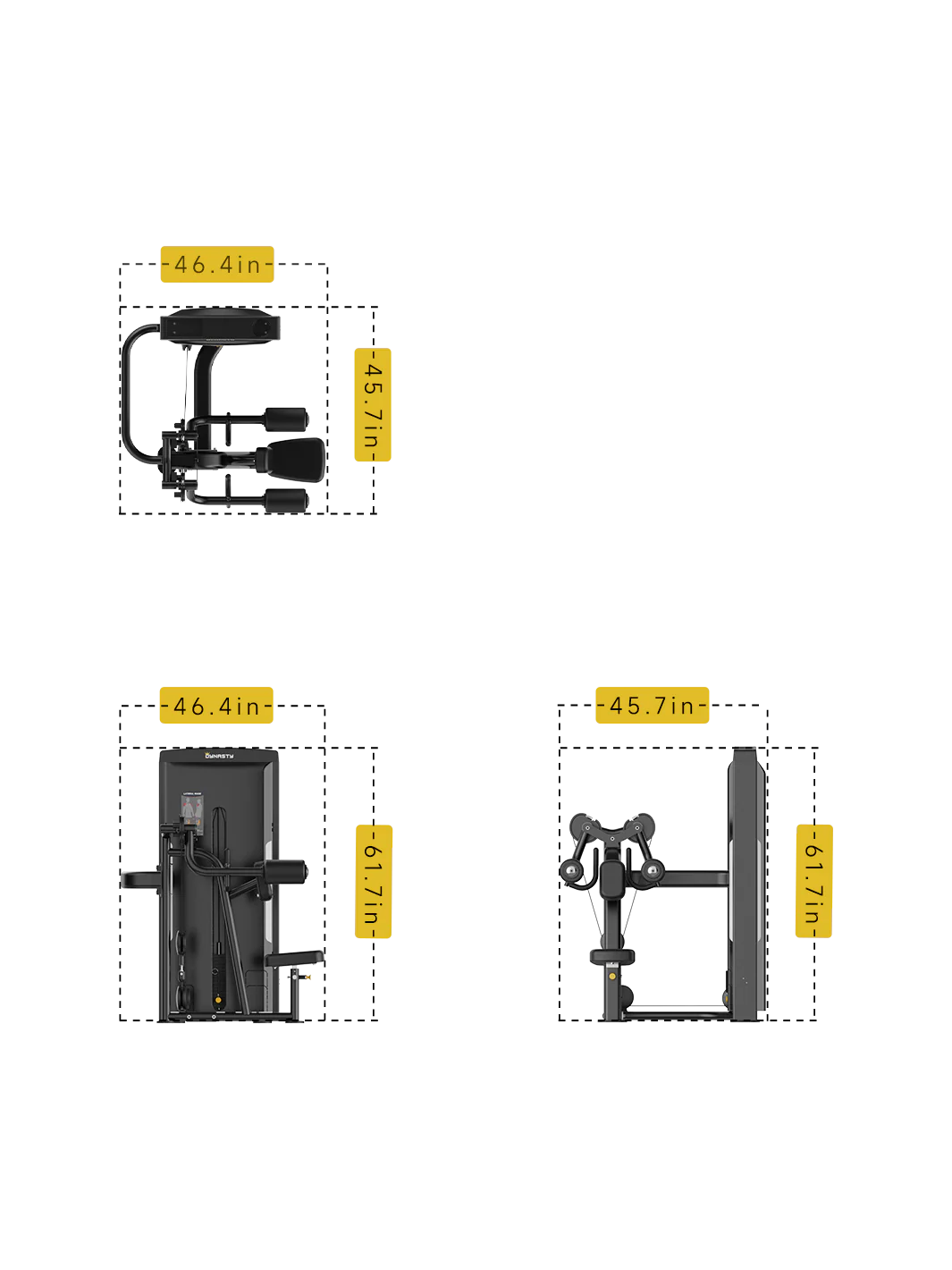
You train shoulders consistently and you know that dumbbell lateral raises are limited by your ability to hold and control the weight as much as by how hard the medial deltoid is working. The DSA034 takes the hand and forearm out of the equation entirely. The arm pad carries the load, the deltoid does the work, and the 6-position seat adjusts the station to your proportions in seconds. At 46.4" × 45.6" it is one of the more compact selectorized shoulder machines available.
Bodybuilders and Physique Athletes
Shoulder width is a primary judging criterion across every physique category. The medial deltoid is what creates that width, and it is consistently undertrained because dumbbell lateral raises are limited by grip and forearm fatigue long before the deltoid reaches its own limit. The DSA034 isolates the medial deltoid by routing the resistance through the arm pad rather than through a handle, which means the set ends when the deltoid fails, not the forearm. The 276 lb maximum stack gives more than enough progressive loading headroom for advanced shoulder development work.
Commercial Gym Owners and Operators
A dedicated lateral raise machine is a consistently occupied station in any gym that serves physique-focused members. The DSA034's rotating arm pads make the exercise easier to execute correctly for a wider range of users than dumbbell alternatives, which reduces technique errors and the associated shoulder complaints. The full shroud enclosure around the weight stack keeps the machine looking clean during high-use periods and protects the cable and pulley components from daily dust and debris.
Private Personal Training Studios
The chest pad and 6-position seat make setup fast and consistent between clients of different heights. A trainer can set the seat, position the client against the chest pad, and focus entirely on coaching the shoulder movement rather than managing the weight in the client's hands. For clients working on shoulder aesthetics or recovering from grip and forearm fatigue issues, the arm pad design removes an obstacle that dumbbell work cannot.
University and College Athletic Departments
Medial deltoid strength contributes to shoulder stability and the active range of motion used in throwing, swimming, and racket sports. A dedicated selectorized lateral raise machine allows precise loading at specific points in a shoulder development programme without the balance and coordination demand that dumbbell work adds — useful when the goal is targeted strengthening rather than motor skill development.
Hotel and Resort Fitness Facilities
Hotel gym members often have limited session time and want to complete shoulder work quickly and efficiently. The selectorized stack with pop-pin selection allows rapid weight changes between sets, and the chest pad provides immediate positional stability that a freestanding dumbbell rack alternative cannot offer to a user who trains infrequently and may not have the technique for clean dumbbell lateral raises.
Owners Manual
Share